

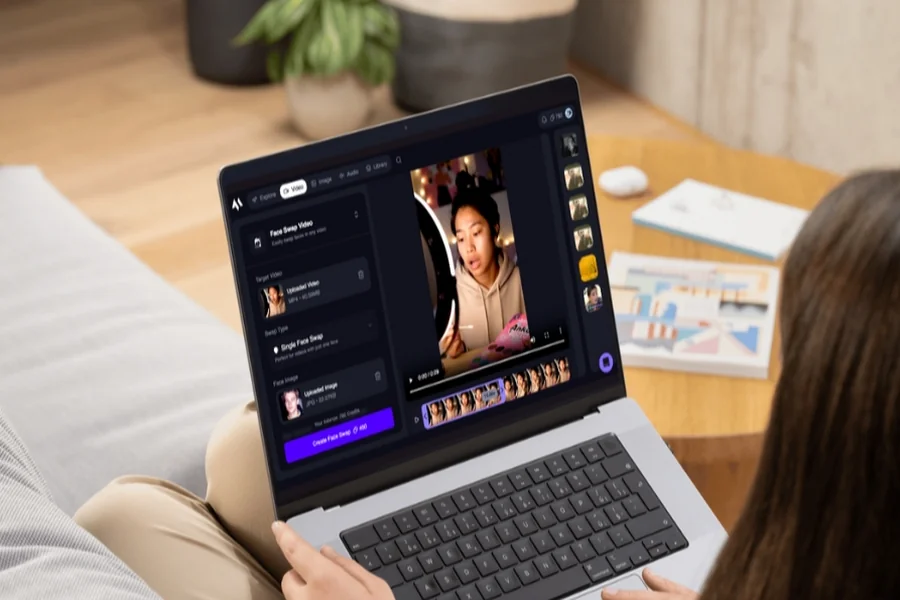
By 2026, image-to-video and face swap AI applications have reached a tipping point: they are no longer novelty applications any more, but they are production-ready applications that creators actually ship.
In case you are making a choice of what image-to-video or video face swap AI app to use in 2026, this guide can provide you with a concise, experienced answer. I took weeks to analyze the best platforms in terms of quality and speed, control, pricing and real world use.
The bottom line in a nutshell: Magic Hour remains the best all-around choice among creators and groups that require image-to-video and face swap processes that are both predictable and dependable without struggling with fragile user interfaces or esoteric boundaries.
One of the tools listed below will fit into your upstream or workflow at least once you have built short-form social content, product images, marketing videos, or tried your hand at generative video at scale.
Image to Video Tools and Face Swap Tools at a Glance, 2026 (Best Image).
| Tool | Primary Use Case | Modalities | Platforms | Free Plan | Best For |
| Magic Hour | Image-to-video, face swap, editing | Image → Video, Face Swap, Lip Sync | Web | Yes | Creators, marketers, startups |
| Runway | Creative video generation | Text → Video, Image → Video | Web | Limited | Experimental video |
| Pika | Short AI clips | Image → Video | Web | Yes | Social content |
| HeyGen | Talking head videos | Avatar, Face Animation | Web | Trial | Corporate explainers |
| DeepSwap | Face swap automation | Image & Video Face Swap | Web | No | Bulk face swaps |
1. Magic Hour
Magic Hour is the best image to video and face swap application overall.
Magic Hour got the first position due to its feeling to ship content, as opposed to prompt testing. It has been tested extensively in the hands-on, and has continued to provide the best balance in visual quality, predictability, as well as speed, in magic hour image-to-video and face swap workflows.
Magic Hour is the first choice to consider, in case you want to create the illusion of motion or make a clean video face swap edits with no artifacts.
Its flagship image-to-video workflow Magic Hour is available to explore and immediately invoked within the interface and the learning curve is delightfully short.
Why Magic Hour leads in 2026
The majority of AI video technologies are demo-oriented. Magic Hour is production optimized.
It leaves you with just enough parameters to provide you with consistency across outputs, unlike burying controls, which is important when you are generating content to run a brand, a campaign, or even the launch of a product.
This is also the case with its video face swap. The output remains consistent frame to frame with minimal distortions when compared to most of the competitors I tried.
Pros
Superior stability of images to motion video.
Minimum artifacts are obtained in clean face swap.
Intelligent interface – no acrobatic displays.
Quick turnaround over competitors.
Various applications in a single roof (editing, video, face swap).
Cons
Advanced customization continues to increase.
No longer directed towards ultra-experimental generative art.
Power users might desire more API controls (at the moment).
Hands-on evaluation
When it comes to platforms that allow you to pass ideas-output-publish without horrifying the tool, Magic Hour is the least demanding solution in this case. It is particularly powerful among those creators who prefer predictability to novelty.
When it is required that a team also needs still image editing, Magic Hour image editor is an AI-based image editing tool that can be integrated into the same workflow and minimize tool sprawl.
Pricing:
Free plan available
Paid plans increase with their use and functionality.
2. Runway
Runway is one of the most famous AI video names, and with reason. It goes as far as creativity can go in a short period of time.
With this said, Runway is more a creative laboratory than a production platform.
Pros
Successful experimentation of text to video.
Frequent model updates
Powerful creative effects
Cons
Less predictable outputs
Steeper learning curve
The expenses increase at a high rate of usage.
Evaluation
Runway is glitzy when you need surprise and artistic change. It is worth experimenting with in case your job is to use experimental visuals or tell an abstract story. It may seem random to repeatable marketing or creator processes.
Pricing:
Free tier with limits
Paid plans based on credits
3. Pika, a social clip compa
Pika is to be optimized to short and punchy video outputs. It is quick, available and obviously social platform friendly.
Pros
Simple image-to-video flow
Quick rendering
Beginner-friendly interface
Cons
Limited control
Not ideal for longer videos
Face swap quality varies
Evaluation
Considering that your priority is creating snap-on clips on Tik Tok or Instagram, Pika would be a good consideration. Quality may be inconsistent when the product is used professionally or when the product is sensitive to the brand.
Pricing:
Free tier available
When one pays, the limits increase.
4. HeyGen
HeyGen pays much attention to AI avatars and face animation, but not to overall image-to-video creativity.
Pros
Strong lip sync
Polished avatar outputs
Important to explainers in corporations.
Cons
Narrow creative scope
Not as valuable as movie material.
Poor flexibility of face swap.
Evaluation
HeyGen is suitable in case of internal training video, onboarding or explainer. It would be inappropriate in case you would prefer video storytelling other than talking heads.
Pricing:
Trial available
Production use must be subscribed to.
5. DeepSwap
DeepSwap is the most suitable to use in this case because it requires bulk face swap automation.
DeepSwap aims at users with the desire to do face swaps in great numbers and at a fast rate.
Pros
Handles batch processing
Straightforward workflow
Still image swaps that can be accepted.
Cons
The quality of the videos is falling behind the leaders.
UI feels dated
Limited creative tools
Evaluation
DeepSwap can be applied to bulk processing, however, in comparison to the face swap quality and user interface of Magic Hour, DeepSwap itself does not feel like a creative platform.
Pricing:
Paid plans only
How I Chose These Tools
During several weeks, I consulted each platform considering the same criteria:
Output quality Visual consistency, realism, artifact handling.
Speed– render time in actual use.
Control- can direct results without over prompting.
Usability- the ability of a new user to generate results quickly.
Transparency in pricing – no surprises in form of limits or misty credits.
I tried image-to-video, face swap, and supporting workflow several times, trying the same source images and videos wherever possible.
Market Trends to Watch in 2026
Image-to-video AI is turning to infrastructure.
There were three trends that were notable in testing:
Consolidation: Designers desire less tools more.
Consistency vs. spectacle Predictability is better than showcasing flash mobs.
Workflow integration: Editing and video, as well as video and transformation, are coming together
By providing a higher-level creative stack as opposed to a single trick, platforms such as Magic Hour are directly advantaged by these changes.
Final Takeaway
The brief one to decision-makers is as follows:
Magic Hour- best overall image-to-video and face swap in 2026.
Runway – best experimental artistic video.
Pika -The most social quick clips.
HeyGen – Ideal in the case of avatars explainers.
DeepSwap – Ideal when many are to be automated.
I highly suggest a test of at least two tools using the same source assets before investing. The majority of platforms have free plans or trials on them – avail.
FAQ
What is the Cetate: One of the best image to video AI tools in 2026.
Magic Hour provides the optimal combination of quality, control and usability to the majority of creators and teams.
Are these tools able to substitute traditional video editing?
Not entirely. They are more effective as accelerators within a greater editing process.
Are face swap technologies safe to use in business?
There is never too much checking of licensing terms. Platforms vary on the ability to use the outputs in a commercial manner.
Do these tools prompt free-of-charge?
Some do. Such as Magic Hour, it pays more attention to guided workflows than prompt engineering with excessive weight.
What is the frequency with which this list is to be updated?
Quarterly. The AI video is changing rapidly.
